


The famous Masai Mara lion became a symbol of Africa, but his story also shows how easily wildlife can become a human-made legend
Scarface: The Lion Who Became Bigger Than His Own Story
By Africa Tour Links
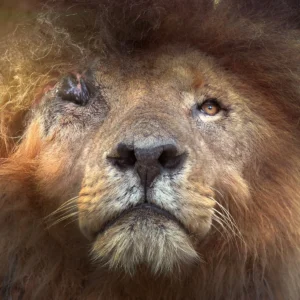
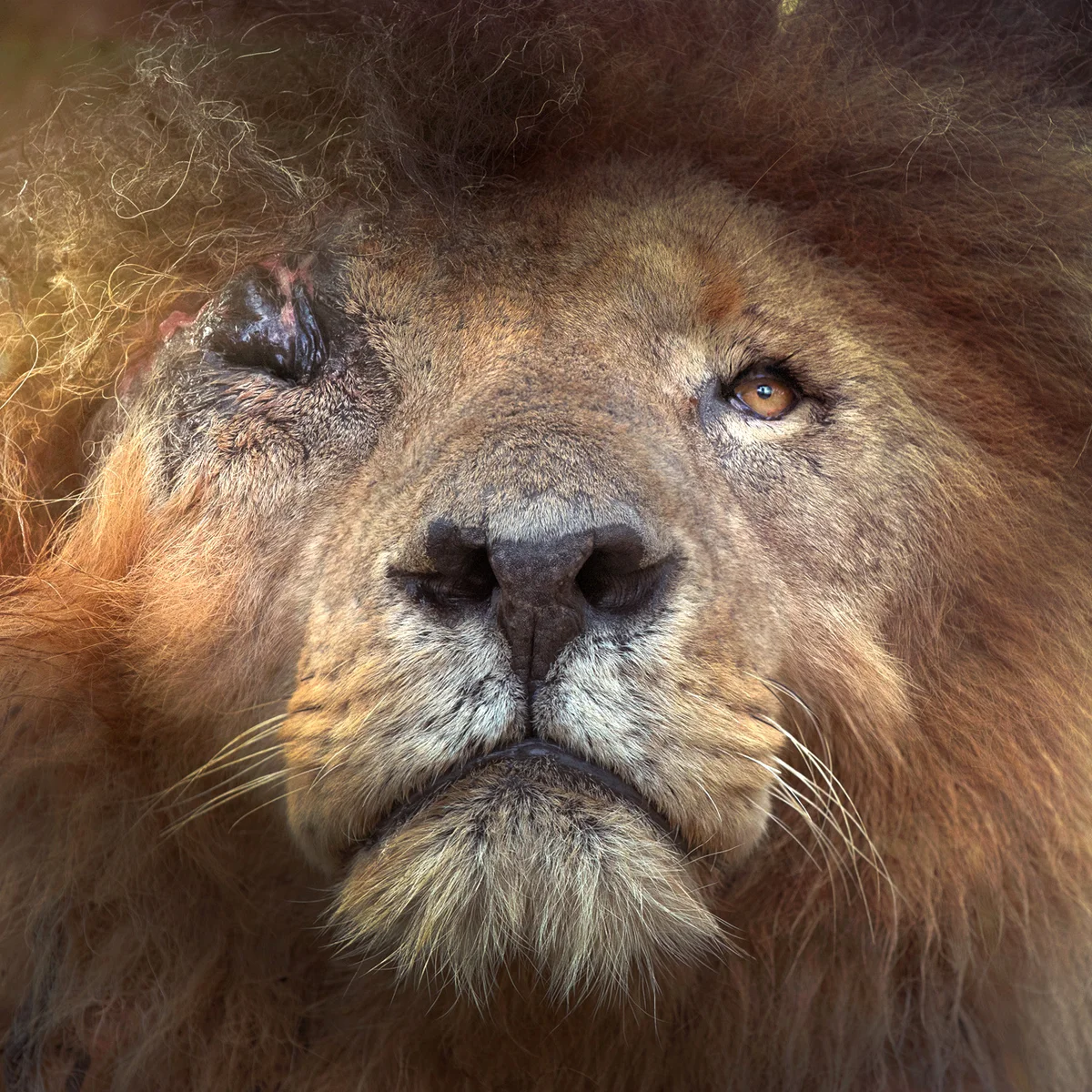
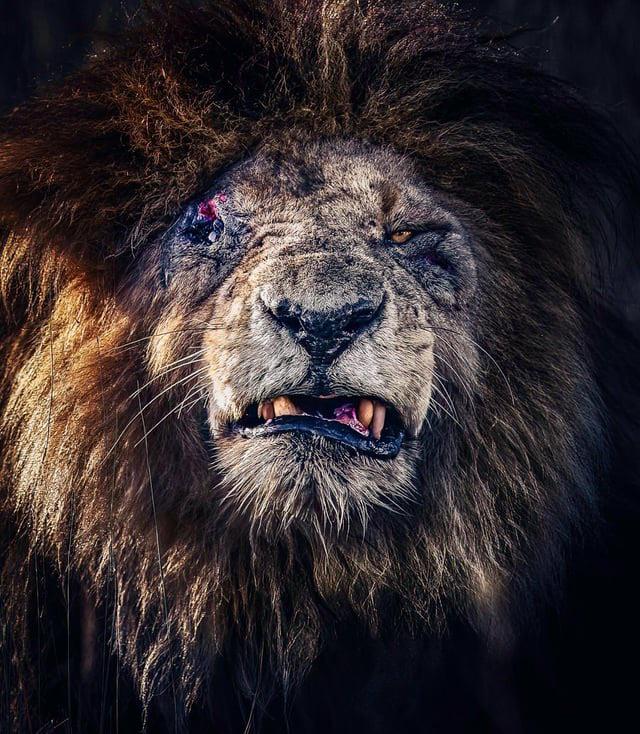
“Scarface was old, scarred and almost impossible to mistake for another lion. His dark mane, weathered face and distinctive scar around his right eye made him one of Africa’s most recognizable male lions.
Tourists travelled to Kenya’s Masai Mara hoping to see him. Photographers followed his life, while social media presented him as a king, warrior and seemingly undefeated ruler of the savannah”.
But where did the real lion end and the myth begin?
Scarface’s story is not only about an extraordinary male lion. It is also about our tendency to give wild animals names, personalities and human-like stories.

Who Was Scarface and How Did He Become Famous?
Scarface is believed to have been born around 2007 and lived in the Masai Mara area of Kenya. His name came from a serious injury around his right eye, which made him easy to recognise even from a considerable distance.
Stories about the origin of the scar vary. Some accounts say it came from a fight with another male, while others mention an encounter with humans. The precise explanation is more difficult to document than the dramatic versions that have circulated online.
What is certain is that Scarface survived the injury and continued to live as a highly recognisable male lion.
He was also not the solitary “king” that he was sometimes portrayed as. His position was closely connected to three other males: Morani, Sikio and Hunter. Together they became known as the “Four Musketeers”, forming a strong male coalition.
That distinction is important because the reality of lion society is considerably more complex than the image of a single ruler dominating the savannah.
Why Did Scarface Become a Wildlife Legend?
The more famous Scarface became, the harder it became to separate documented information from stories that had been embellished over time.
He was credited with an almost unbelievable number of battles and killings of hyenas. Claims that he killed hundreds of hyenas continue to circulate, but the article’s source material notes that there is no scientific documentation or reliable record supporting such claims.
The reality is fascinating enough without exaggeration.
A male lion’s life is shaped by competition. Territories must be defended, rivals kept away, and access to food and females is never guaranteed. When younger and stronger males take over an area, previous occupants may be killed, seriously injured or driven away.
Scarface lived to around 14 years of age, which was remarkable for a free-ranging male lion.
How Did Scarface Die?
Scarface died in the Masai Mara on 11 June 2021 from natural causes.
According to the people who followed him, he was allowed to die without disturbance. His final days therefore had a considerably more peaceful ending than many old male lions experience.
The story of his death was widely reported internationally, including by The Guardian’s report on Scarface’s final days.
His death marked the end of the life of a lion that had become far more than an individual animal in the eyes of the public.
What Happens When a Wild Animal Gets a Name?
Giving an animal a name can have a powerful effect on how people understand nature.
Visitors may not simply hope to see a lion. They may travel to the Masai Mara specifically hoping to find Scarface.
The same phenomenon occurs with famous elephants, gorillas, leopards and other individual animals. A recognizable animal can create an emotional connection that statistics about an entire population rarely achieve.
This can benefit conservation. People often care more deeply about something they feel they know. A famous animal can attract tourists, photographers, donations and international attention.
But there is another side to the story.
Can Naming Wildlife Change How We Understand Nature?
Once an animal becomes a personality, people can begin interpreting its life through human ideas.
A male lion becomes a king. A rival becomes a throne challenger. A territorial confrontation becomes a heroic battle.
Nature is then reduced to a story with characters that audiences can love or hate.
The danger is that the individual animal begins to overshadow the wider ecosystem.
Scarface was not a king in the human sense. He did not defend a kingdom, fight for honour or attempt to live up to his name. He responded to competition, hunger, reproduction, territory and the environmental conditions that shaped his life.
That does not make his story less fascinating. In many ways, it makes it more interesting.
What Can Scarface Teach Us About Conservation?
The story of Scarface highlights an important distinction between protecting individual animals and protecting wildlife populations.
A lion population cannot survive simply because a few famous lions are protected. Lions need sufficient habitat, prey, space and tolerance from people living alongside them.
The source article notes that African lions face pressures including habitat loss and fragmentation, declining prey populations, conflict with people and livestock, illegal killing and trade in body parts.
This means that conservation must look beyond individual celebrities and consider the ecological system that supports entire populations.
How Did Cecil Become Another Famous Lion Symbol?
Perhaps the clearest example of the power of a wildlife name is Cecil, the Zimbabwean lion who was killed in July 2015.
Cecil lived in and around Hwange National Park and was known by researchers, guides and tourists. When American dentist Walter Palmer killed him during a hunt outside the national park, the case rapidly developed into an international media storm.
It was no longer simply the death of a lion.
It was the death of Cecil.
His name, photographs and established public story made the event intensely personal for audiences around the world.
Did Cecil’s Death Change the Wider Debate About Lions?
The Cecil case had consequences far beyond Zimbabwe. Airlines changed rules concerning the transportation of hunting trophies, while campaigns for import restrictions gained momentum in several Western countries.
At the same time, the future of lions was often reduced to the story of one famous individual.
The wider conservation picture is considerably more complex.
Lions are affected by habitat loss and fragmentation, declining prey, conflicts involving livestock, illegal killing and other pressures. Trophy hunting can create additional pressure when poorly regulated or when biologically important males are targeted. At the same time, hunting revenue can, in some areas, contribute to wildlife management and provide local communities with an economic incentive to maintain wildlife habitat.
The economic and conservation dimensions of the debate were also discussed by Netnatur in “Hvad hadekampagnen overså”.
Why Should We Look Beyond Famous Animals?
Scarface and Cecil demonstrate how strongly a single animal can influence public attention.
But conservation cannot be measured only by whether a famous lion survives.
It also depends on the number of lions remaining, the size and quality of their habitat, the availability of prey, human-wildlife relationships and the financial resources available for conservation.
A famous animal can open the door to greater interest in nature. The challenge is making sure that interest extends beyond the individual.
For more wildlife and nature stories, readers can explore Netnatur’s Africa section.
Scarface Was Neither King nor Warrior
Scarface never knew that people considered him a legend.
He did not defend a kingdom. He did not fight for honour. He did not try to live according to the meaning humans attached to his name.
He was a wild male lion responding to the realities of life on the African savannah.
His long life was likely the result of a combination of physical strength, experience, cooperation and chance.
His scar was not a heroic badge.
It was an injury.
His coalition was not a brotherhood in the human sense.
It was an effective survival strategy.
And when he eventually lost his strength, it was not the fall of a kingdom. It was the natural conclusion of an unusually long life for a wild male lion.
What Does Scarface’s Story Tell Us About African Lions Today?
The source article also compares the development of African lions with the return of wolves in Europe.
The African lion population is estimated in the article at around 22,000–25,000 adult and near-adult animals, with the overall trend described as declining. European wolves, by contrast, were estimated at around 23,000 animals in 2023, with the article describing an increase of approximately 35% since 2016.
The comparison highlights a broader conservation lesson: large carnivores are influenced by habitat, legal protection, human tolerance, prey availability and the economic systems surrounding wildlife.
Readers interested in the European wolf can explore Netnatur’s wolf section, while the European wolf population information referenced in the article is available through the European Commission’s overview of large carnivore populations.
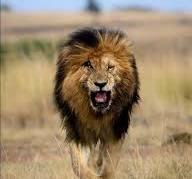
Why Must the Name Never Overshadow the Nature and Tourism?
Scarface shows why named animals can become powerful ambassadors for wildlife.
His face gave millions of people a connection to the Masai Mara and to African lions.
But his story also demonstrates the risk of allowing the legend to replace the ecological reality.
People may mourn a famous lion such as Cecil or Scarface while finding it harder to engage with the disappearance of thousands of unknown lions, prey animals and areas of natural habitat.
The answer is not to remove the stories.
It is to use them as a doorway into a larger understanding of nature.
Scarface was extraordinary not because he was a movie-style king, but because he was an old wild male lion who survived for many years and was observed closely enough for people around the world to recognize his face.
The myth made him famous.
The reality made him interesting.