


Kenya has launched a long-term recovery plan for the critically endangered mountain bongo. The plan aims to increase the national population by 50 percent by 2030 and establish a self-sustaining wild population of 750 animals by 2075
Kenya’s 50-year plan to save the mountain bongo
Af AfricaTourLinks Editorial Team
“The mountain bongo is a rare forest antelope found in Kenya. A new national recovery plan includes captive breeding, reintroduction, genetic management, disease control and monitoring as part of efforts to increase the population”.
A rare antelope of Kenya’s mountain forests
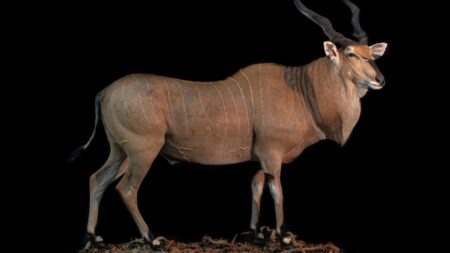
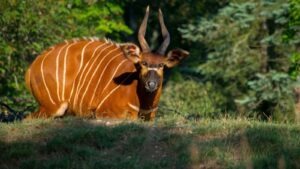
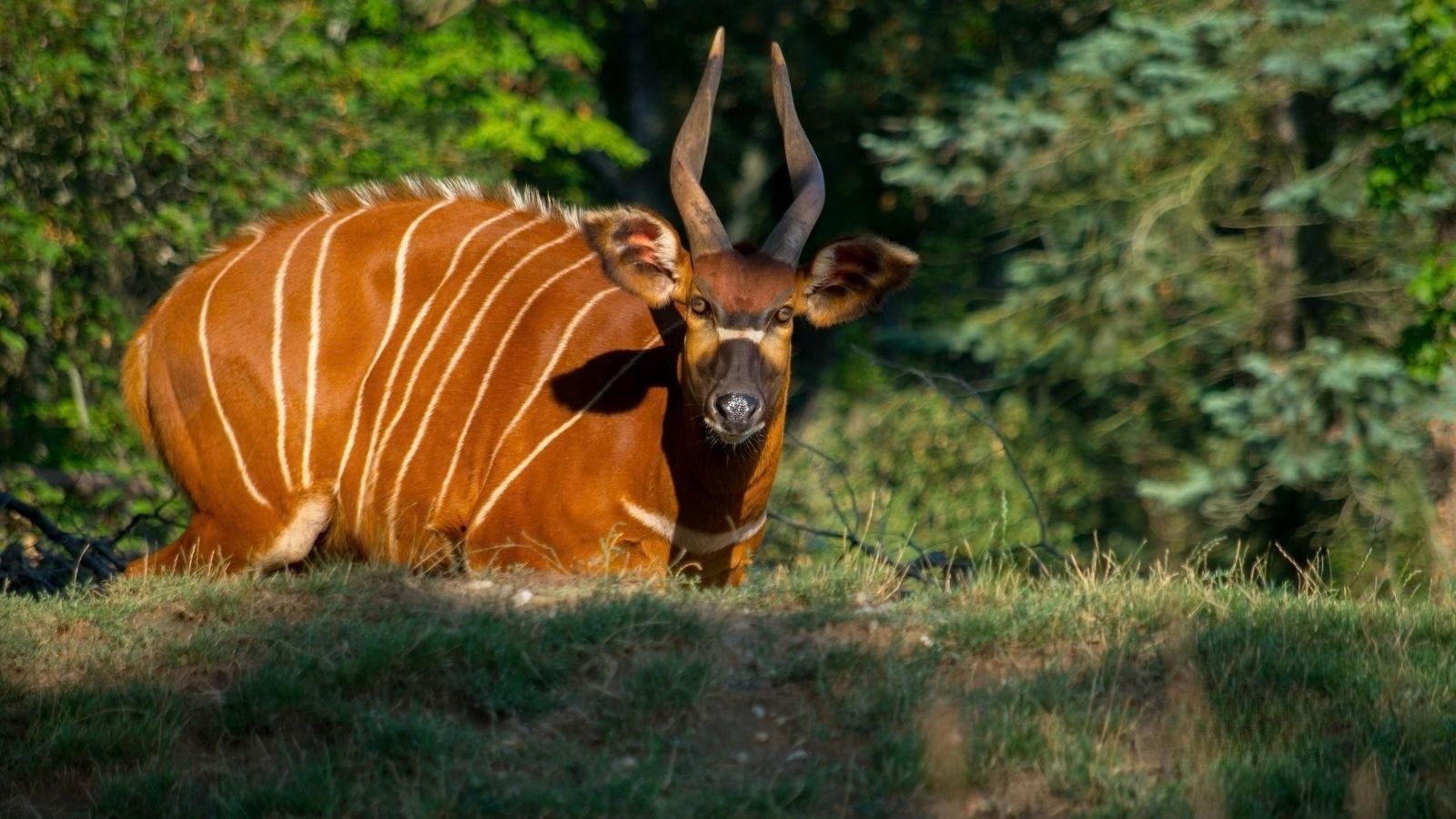
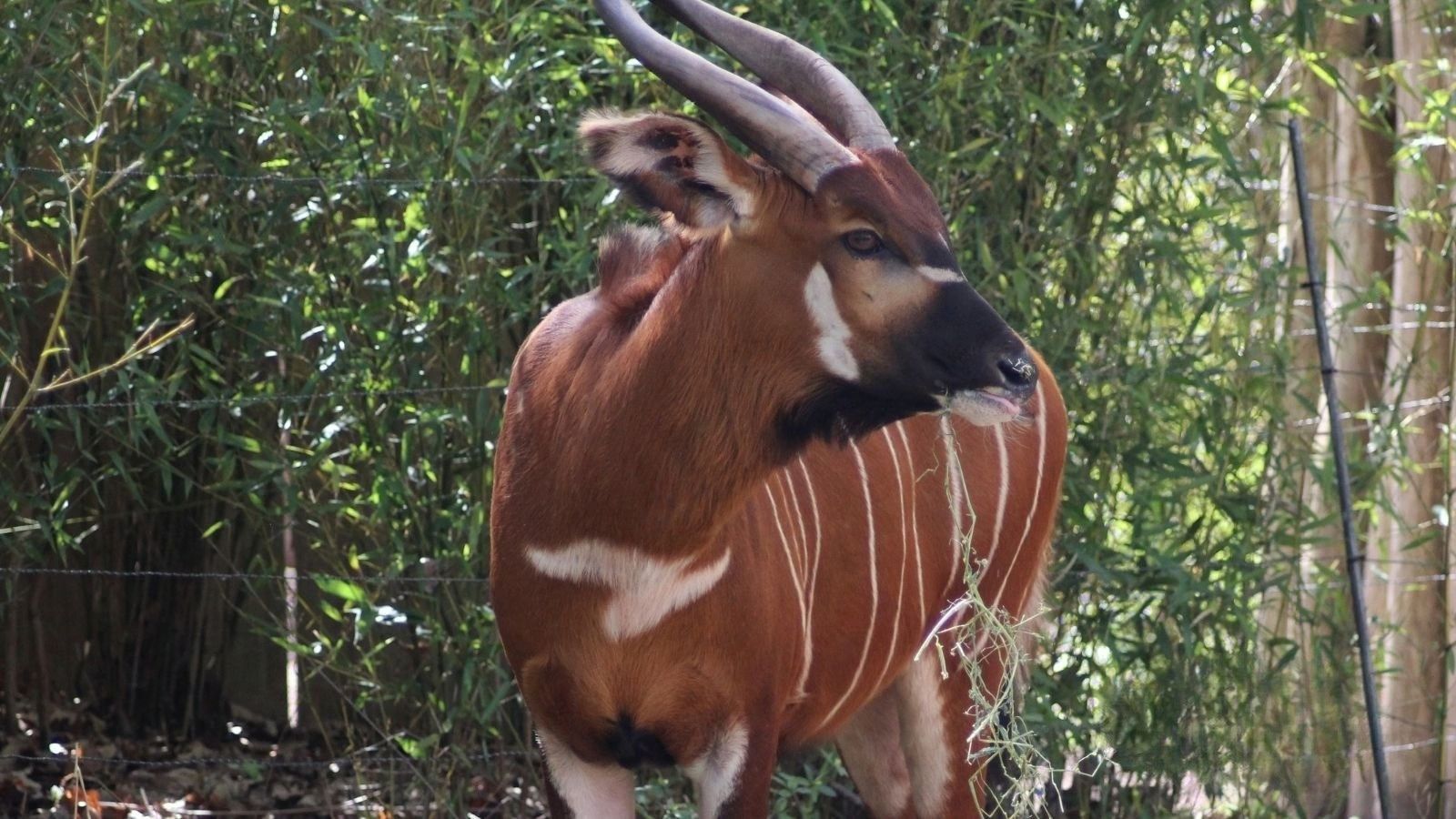
The mountain bongo is a large forest antelope with a reddish-brown coat and pale vertical stripes. Both males and females have horns.
The mountain bongo is the Kenyan subspecies Tragelaphus eurycerus isaaci. The subspecies occurs in Kenya’s mountain forests and has a restricted wild distribution.
Its preference for forest habitat also distinguishes it from many of the African antelopes commonly associated with open grasslands and savannah.
Kenya launches a new recovery plan
Kenya launched its new mountain bongo recovery plan on 23 September 2026.
According to the International Union for Conservation of Nature (IUCN), the plan aims to increase the national mountain bongo population by 50 percent by 2030.
The five-year programme has an estimated budget of approximately US$3.5 million.
The measures included in the plan cover captive breeding, reintroduction, genetic management, disease control and monitoring.
Captive breeding and reintroduction
Captive breeding is one of the components of the recovery programme.
The plan also includes reintroduction of mountain bongos into the wild. This means that conservation work will not be limited to maintaining animals in captivity but will also involve efforts to establish animals in suitable wild habitat.
Genetic management is another element of the programme. Disease control and monitoring are also included.
Monitoring can provide information about the progress of the recovery programme and the results of reintroduction efforts.
Protecting the mountain forest habitat
The recovery of a wild mountain bongo population is linked to the availability of suitable forest habitat.
The mountain forests where the subspecies occurs are also important to people in the surrounding areas. They contribute to water supplies and agriculture, while nature tourism can provide local income.
Kenya’s recovery programme therefore includes local communities as part of the conservation effort.
The long-term outcome will depend on how the different elements of the programme develop over time, including breeding, reintroduction, habitat protection and monitoring.
The 2030 target
The first major target is to increase the national mountain bongo population by 50 percent by 2030.
This is a measurable target within the first five years of the new recovery plan.
The programme will need to monitor population numbers and the results of conservation activities to assess progress towards this target.
A population increase, however, is only one part of the longer-term objective. Kenya ultimately wants to establish a wild population that can sustain itself.
The 2075 target
The long-term target is 750 mountain bongos living in a self-sustaining wild population by 2075.
That target gives the recovery programme a 50-year perspective.
Reaching it would require mountain bongos to survive and reproduce in the wild at a level sufficient to maintain the population without depending permanently on continued additions from captive breeding.
The plan’s progress will therefore need to be assessed over many years.
An elusive forest antelope
The mountain bongo is not an animal that is easily observed in the wild.
It lives in forest habitat and has a secretive behaviour. Its reddish-brown coat and vertical stripes are characteristic features of the species.
For wildlife travellers, the mountain bongo is therefore a very different species from the large mammals normally associated with open savannah landscapes.
However, the presence of mountain bongos in an area does not guarantee sightings. As with other elusive wildlife, observations in the wild depend on the animals’ distribution, behaviour and local conditions.
Kenya’s mountain bongo
Species: Mountain bongo
Scientific name: Tragelaphus eurycerus isaaci
Country: Kenya
Habitat: Mountain forests
Conservation status: Critically Endangered
2030 target: 50 percent increase in the national population
2075 target: 750 animals in a self-sustaining wild population
Recovery measures: Captive breeding, reintroduction, genetic management, disease control and monitoring
Estimated five-year budget: Approximately US$3.5 million