

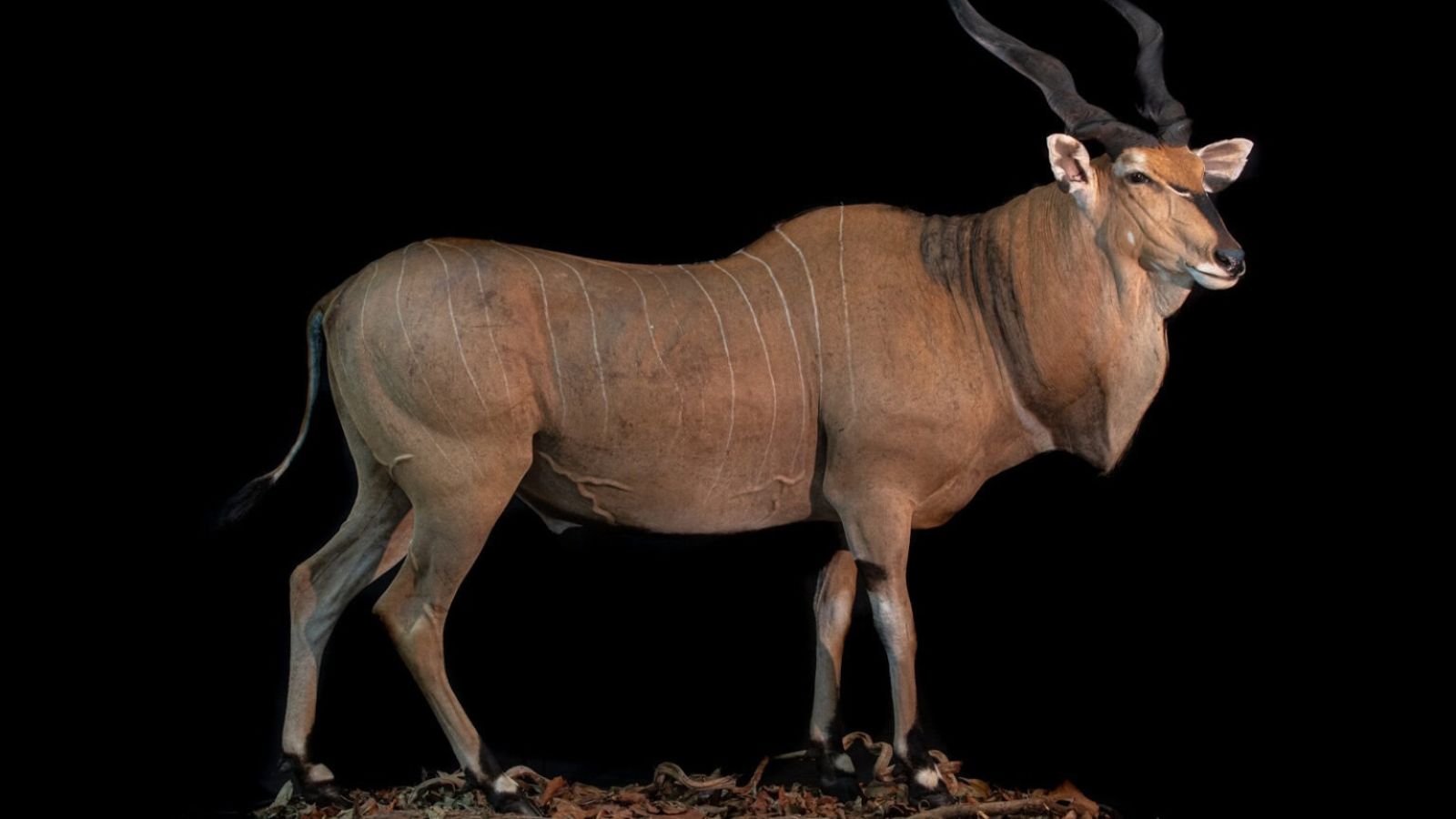
Discover the history, impressive size and hunting heritage of the Lord Derby eland, one of Africa’s most remarkable antelopes
Lord Derby Eland: Africa’s Giant Antelope
By Africa Tour Links
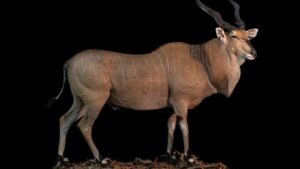
“With its enormous spiral horns, powerful neck and impressive body, the Lord Derby eland is one of Africa’s most remarkable antelopes.
Also known as the giant eland, the species carries the scientific name Taurotragus derbianus. Despite its name, however, it is not named after an African region or the famous English horse race.
Its name goes back to a British aristocrat, Edward Smith-Stanley, the 13th Earl of Derby, whose remarkable zoological collection helped bring the animal to the attention of European science”.
Why Is the Lord Derby Eland Named After an English Earl?
Edward Smith-Stanley, the 13th Earl of Derby, lived from 1775 to 1851 and was not only involved in British politics but also had a strong interest in zoology and natural history.

At Knowsley Hall near Liverpool, he developed an extensive collection of birds and mammals. The collection included living animals, skins, skeletons and other zoological specimens from different parts of the world.
In the 19th century, his financial resources and international connections allowed collectors to search for animals that were little known or unknown to European science.
The material collected for his collection eventually played a role in the scientific description of the giant antelope.
How Was the Lord Derby Eland First Described?
In 1846, British collector John Whitfield returned from the region around the Gambia River with horns belonging to a very large antelope.
The horns resembled those of the already known eland of southern Africa, but they appeared longer, heavier and more powerful.
Further material was later collected, including skulls, horns and skins from both a bull and a cow. The animal was reportedly known locally as Gingi-ganga.
The material reached Lord Derby’s collection and was examined by British zoologist John Edward Gray.
In October 1847, Gray described the animal as a new species under the name Boselaphus derbianus. The species name derbianus honoured Edward Smith-Stanley, the 13th Earl of Derby.
The species was later moved into the genus Taurotragus, but the connection to Lord Derby remained. The animal is therefore known today as Taurotragus derbianus — the Lord Derby eland.
Is the Lord Derby Eland Really the World’s Largest Antelope?
The Lord Derby eland is generally regarded as the world’s largest antelope species.
Large bulls can approach a tonne in weight, while their impressive horns can exceed 120 centimetres.
The species is characterized by its powerful neck, large dewlap and light vertical stripes along the body. Mature bulls also become darker with age.
Both males and females carry horns, although those of the bulls are considerably heavier and more impressive.
Where Does the Lord Derby Eland Live?
The Lord Derby eland is associated with parts of West and Central Africa.
The source describes two recognized subspecies.
The Western Lord Derby eland (Taurotragus derbianus derbianus) is today known with certainty from Senegal, where its remaining natural population occurs in Niokolo-Koba National Park. This subspecies is critically endangered and is not hunted for trophies.
The Eastern Lord Derby eland (Taurotragus derbianus gigas) occurs in parts of Central Africa and can be legally hunted under specific licences in countries including Cameroon and the Central African Republic.
What Makes Lord Derby Eland Hunting So Challenging?
The Lord Derby eland is described as cautious, alert and capable of moving across large areas.
For hunters pursuing the species, this can mean a demanding tracking hunt through savannah, open woodland and thicker vegetation.
A disturbed herd can cover considerable distances, making it necessary for trackers and hunters to follow fresh signs and potentially begin the search again after the animals have moved.
This combination of size, habitat and behaviour is one reason the species has become associated with highly specialized African hunting safaris.
Why Is Lord Derby Eland Considered an Exclusive Hunting Species?
There is a substantial difference between hunting a Cape eland and pursuing a Lord Derby eland.
Cape eland can be hunted in several southern African countries and may form part of a broader plains-game safari.
A Lord Derby eland hunt, by comparison, normally involves remote areas of Central Africa, specialized logistics and longer hunting periods.
The source notes that the total cost of such a safari is influenced not only by the trophy fee but also by daily rates, licences, transportation, camp operations and other logistical expenses.
What Are the Different Eland Species and Subspecies?
There are two recognized eland species: the common eland (Taurotragus oryx) and the Lord Derby eland (Taurotragus derbianus).
Common eland occurs across eastern and southern Africa and includes several recognized subspecies, including Cape eland, Livingstone eland and Patterson eland.
The Lord Derby eland is a separate species with two subspecies: the Western Lord Derby eland and Eastern Lord Derby eland.
This distinction is important because the different populations have very different geographic ranges and conservation situations.
Why Is the Lord Derby Eland Important to African Wildlife Tourism?
The Lord Derby eland represents more than an impressive trophy animal.
Its story connects African wildlife with natural history, scientific discovery, conservation and specialised tourism.
For travellers interested in African wildlife, the species offers an opportunity to explore a less familiar side of the continent beyond the better-known Big Five.
For those interested in hunting tourism, the species is associated with specialised safaris in remote landscapes where professional guides, trackers and local knowledge play an important role.
The wider hunting-tourism sector can also connect visitors with landscapes and wildlife areas that are rarely encountered on conventional safari routes.
What Is the Story Behind the Lord Derby Eland Name?
More than 175 years after John Edward Gray described the species, the name of Edward Smith-Stanley remains attached to one of Africa’s most impressive antelopes.
Lord Derby did not personally discover the animal and did not travel to West Africa to find it.
His contribution came through his collection, financial support and network, which helped make scientific study of the animal possible.
The story is therefore a reminder of a period when wealthy European collectors played an important role in the development of zoological collections and the classification of wildlife from around the world.
Where Can You Discover African Hunting and Wildlife Safaris?
For travellers interested in exploring African hunting destinations, wildlife areas and safari opportunities, specialist travel platforms can make it easier to discover different destinations and connect with tour operators.
Africa Tour Links is designed to help travellers understand where to go, why to choose a destination and how to connect with tour operators.
For a species as specialized as the Lord Derby eland, choosing the right destination and experienced operator is particularly important because hunting opportunities, licences, seasons and conservation regulations vary between countries.
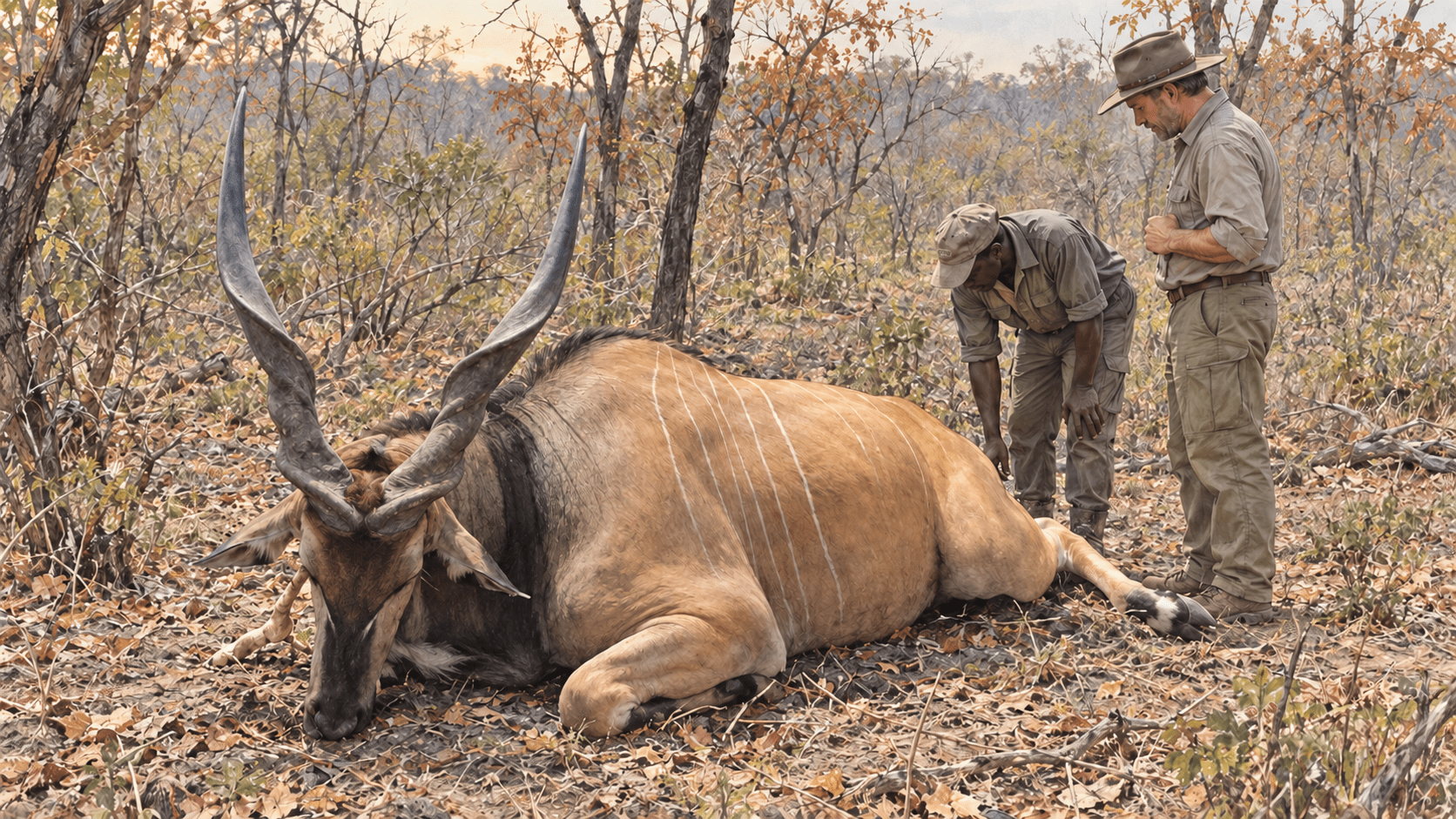
Lord Derby Eland: A Giant With a Remarkable History
The Lord Derby eland stands out not only because of its size and spectacular horns, but also because of the history attached to its name.
From the Gambia region and the zoological collections of 19th-century Britain to modern wildlife management and specialized African hunting safaris, the species has a story that stretches across continents and generations.
For anyone fascinated by Africa’s wildlife, the Lord Derby eland offers a reminder that some of the continent’s most remarkable animals are found far beyond the usual safari headlines.