

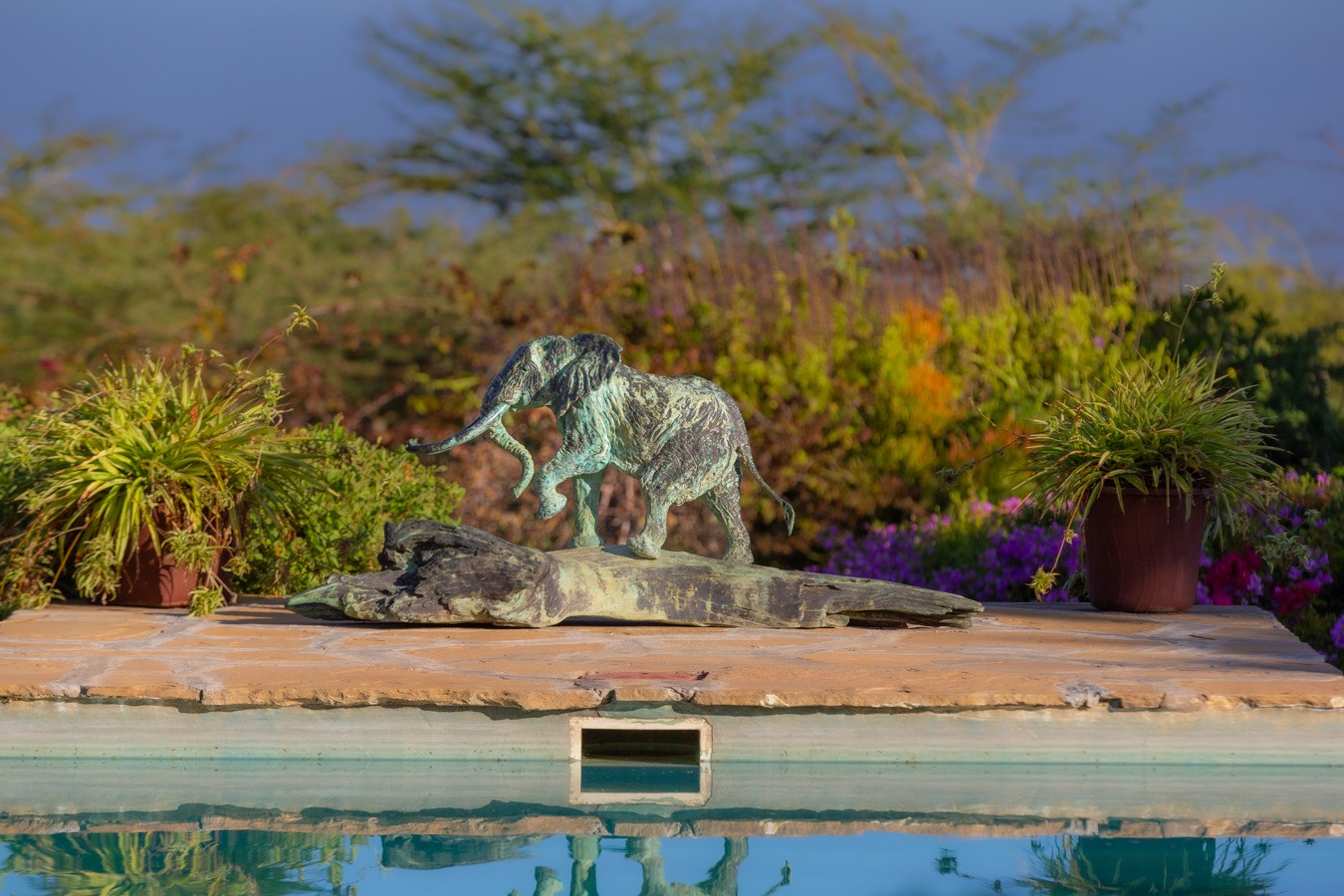
Just 45 minutes from Nairobi lies a home where time seems to stand still. Built by a visionary craftsman who believed that corners trap bad spirits, TAW’s House is more than accommodation,it is a living work of African architecture, craftsmanship, and heritage
TAW’s House: Modern Comfort Inspired by African Tradition and Settler Elegance
By Africa Tour Links
A House Without Corners
“Have you looked up at the ceiling?”
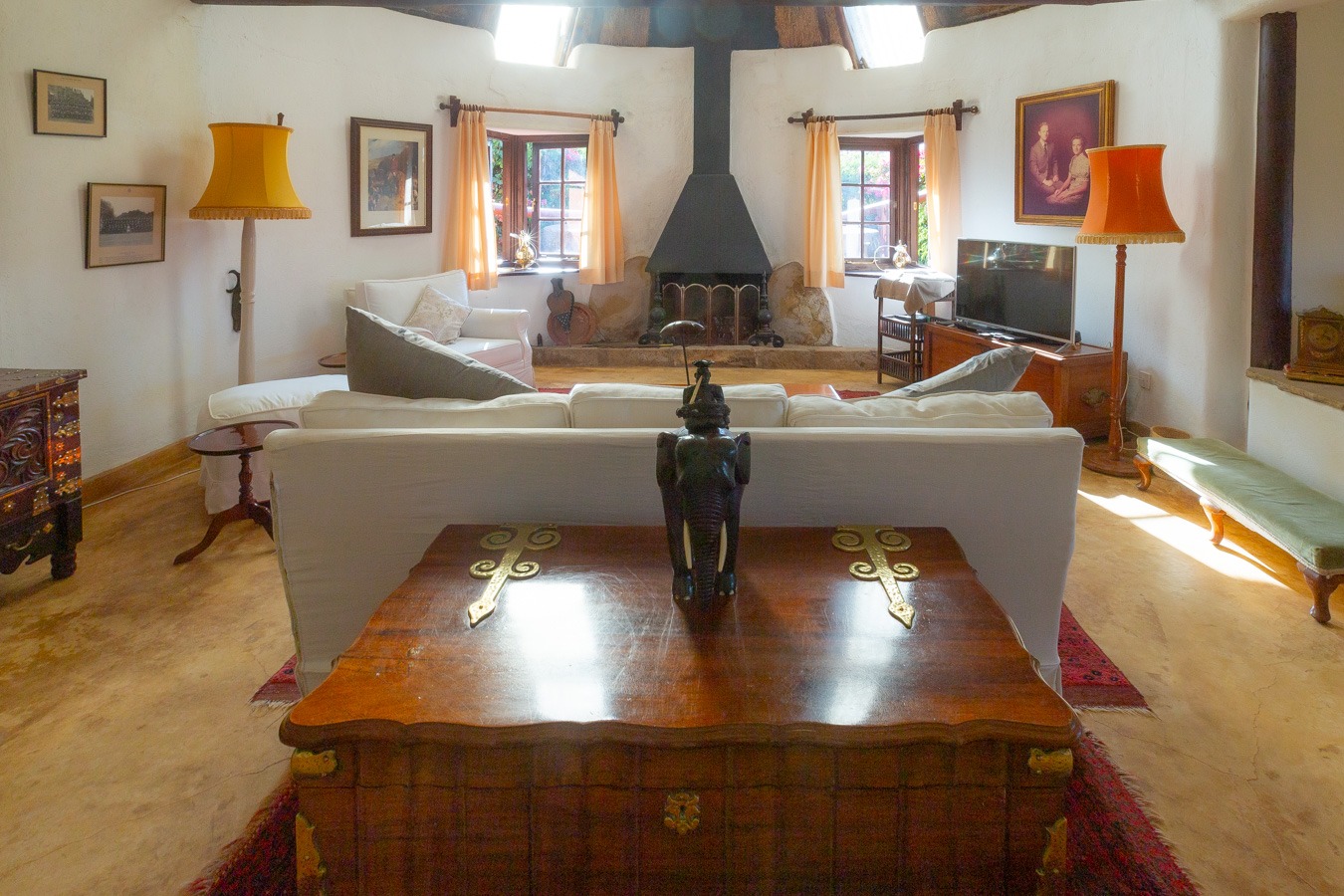
Robin stood in the middle of the living room, gazing toward the roof. It wasn’t simply a ceiling, it was a masterpiece. Concentric circles of handwoven thatch, each carefully secured with bamboo poles, curved into a magnificent dome that appeared to float above us.
“There isn’t a single corner,” I replied.
That was the philosophy of the home’s creator.
The owner of TAW’s House, a man who designed and built homes throughout Kenya, believed that corners trap negative spirits. So he chose another path. Circular rondavel-inspired rooms. Domed ceilings. Flowing spaces without sharp angles.https://www.tawshouse.com
The walls were equally remarkable. Every brick was handmade on-site and finished with locally sourced murram, the distinctive red earth that gives Kenya much of its character.
“How long did it take to build all this?” Robin asked.
I shrugged. We would hear the full story later.
 |
 |
One Man’s Vision
TAW’s House stands within the peaceful Maanzoni Wildlife Estate, around 45 minutes southeast of Nairobi, depending on traffic. Yet the story of this remarkable home began many years earlier.
The owner first learned construction while serving in the army in South Sudan. Although he worked professionally as a tea farmer, building was always his true passion. In Sudan he constructed a tea factory. In Kenya, he created his life’s masterpiece.
“My father loved natural materials,” his daughter later explained. “He used thatch because it belonged to Africa. He made his own bricks because he knew how. He coloured the cement with local murram because he thought it was beautiful.”
Everything came from the surrounding area, not simply because it was economical, but because he believed that buildings should grow from the landscape rather than be imposed upon it.
The original brick-making machine still stands on the property today as a reminder of that extraordinary process.
Omondi, who worked with the family for nearly thirty years, knows every brick in the house.
The thatchers, bricklayers, blacksmiths, and craftsmen who worked here all learned their skills from one remarkable builder. Generations of artisans in Maanzoni can trace their knowledge back to him.
Wildlife at Your Doorstep
Every morning begins with birdsong.
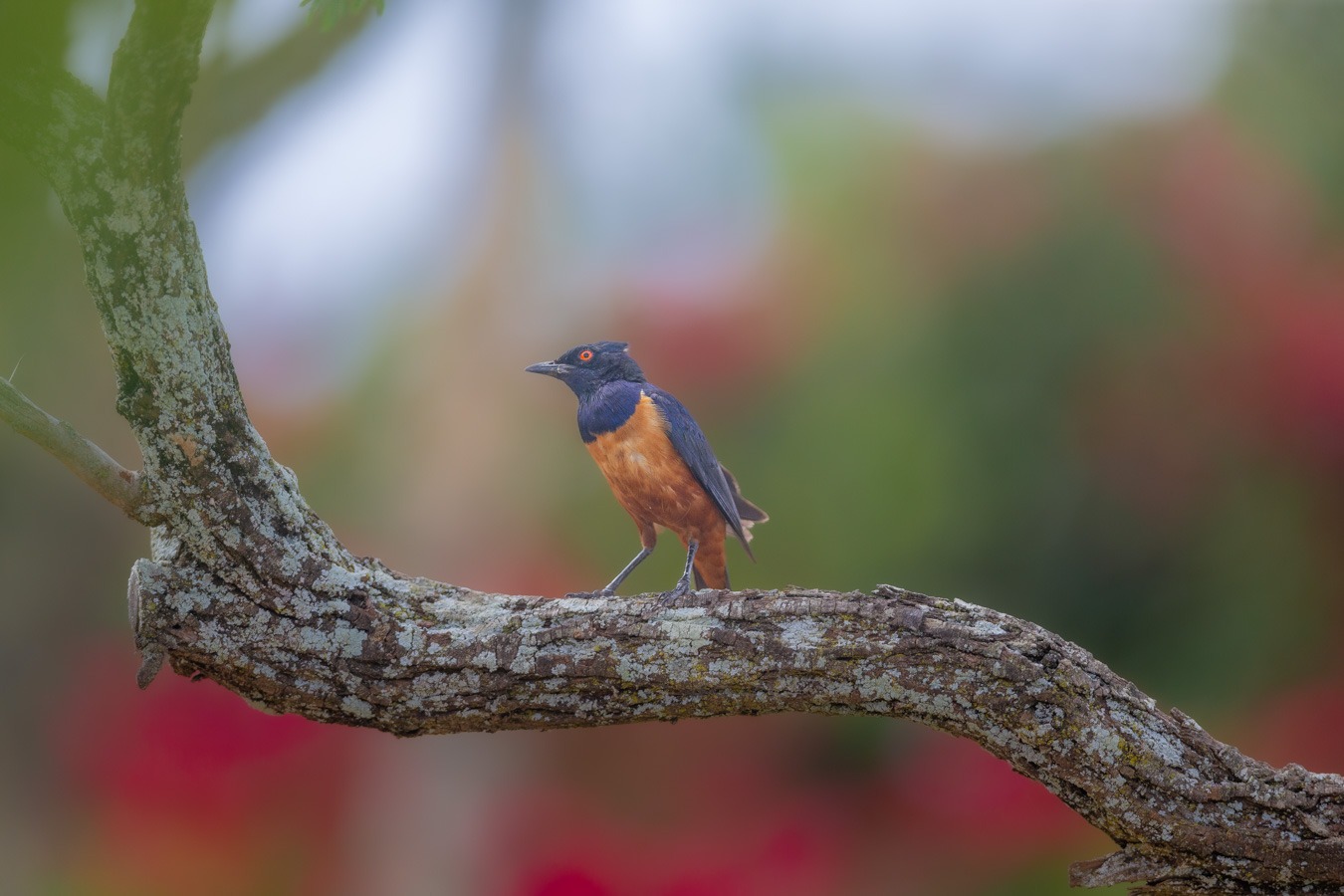
Before sunrise, superb starlings, hornbills, African fish eagles, and dozens of other bird species create a natural concert that continues until evening.
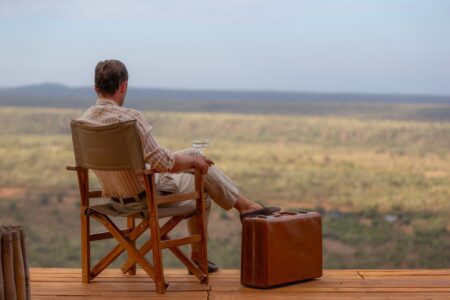
From the veranda, you don’t watch wildlife through binoculars from a distance—you simply observe life unfolding a few metres away.
Vervet monkeys are frequent visitors.
“They’re clever,” Peter warned us. “Keep the windows closed if you’ve left fruit inside.”
Only ten minutes away lies a watering hole where wildlife gathers throughout the day.
Zebras graze peacefully beside Thomson’s gazelles. Giraffes lower their long necks to drink while constantly scanning the surroundings. Warthogs wander through the grass, elands move gracefully across the plains, and, if fortune smiles upon you, cheetahs occasionally appear.
We sat there quietly for nearly forty-five minutes.
No crowds.
No safari vehicles.
Just Kenya.
Gin and Tonic at Sunset
“Shall we sit on the veranda?”
Peter, the house chef, had already prepared everything.
Perfect gin and tonics.
Fresh cucumber.
The proper glasses.
Salted nuts.
Small meat snacks.
 |
 |
As the sun slowly disappeared behind the horizon, the sky transformed from orange to pink before settling into deep shades of purple.
“This is how they did it,” Robin said as he lit a cigar. “The settlers in the 1920s.”
In Kenya, cigars seem to belong naturally beside a sunset, a good gin and tonic, and stories shared among friends.
 |
 |
 |
At exactly 8:00 pm, dinner was served.
Dining Like the Golden Age of Safari
There was no buffet.
No casual self-service.
Dinner was an elegant three-course affair served around the dining table.
Before Dinner
Gin and tonic on the veranda.
Salted nuts.
Light meat appetisers.
Starter
Cold roast chicken with mango chutney.
Fresh tomato and onion salad with coriander.
Passion fruit.
Main Course
Grilled steak with rich sauce.
Roasted sweet potatoes with butter.
Creamed spinach.
Fresh green salad with vinaigrette.
Dessert
Traditional bread and butter pudding served with warm crème anglaise.
Everything was beautifully presented.
Fine tableware.
Wine on the table.
Oil lamps combined with soft electric lighting.
“Our host simply told us to send Peter a shopping list,” we had been told beforehand. “Choose whatever you would like to eat, and he will prepare it.”
No printed menus.
No limited choices.
Simply your favourite meals, cooked with care.
We requested a classic British colonial-style dinner.
Peter delivered it with remarkable precision.
Architecture with Soul
The thick walls naturally regulate the indoor temperature.
During Kenya’s hot afternoons, the rooms remain cool.
When evening temperatures fall, the walls gently retain warmth.
“My father knew exactly what he was doing,” the caretaker smiled.
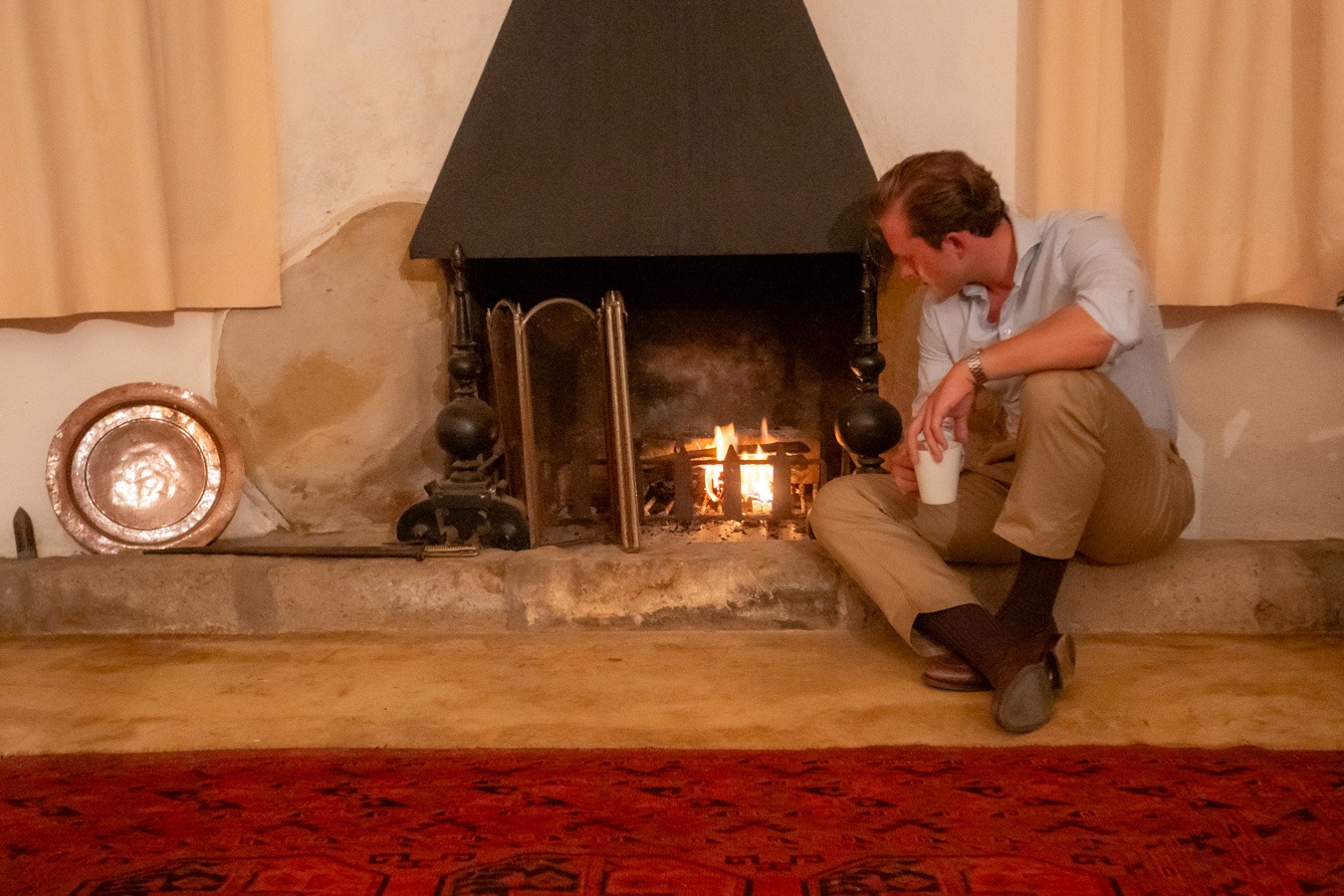
The circular central living room features a working fireplace—a welcome comfort during cool Kenyan nights.
White sofas surround the fire.
Antique lamps cast warm golden light upward toward the magnificent thatched dome.
Each bedroom follows the same circular design.
Mosquito nets descend elegantly from the centre of the ceiling.
Antique bedside tables, locally inspired artwork, and handcrafted furniture complete the atmosphere.
There are no televisions.
No air conditioning.
None is necessary.
Instead, there is silence, birdsong, and the gentle breeze flowing through open windows.
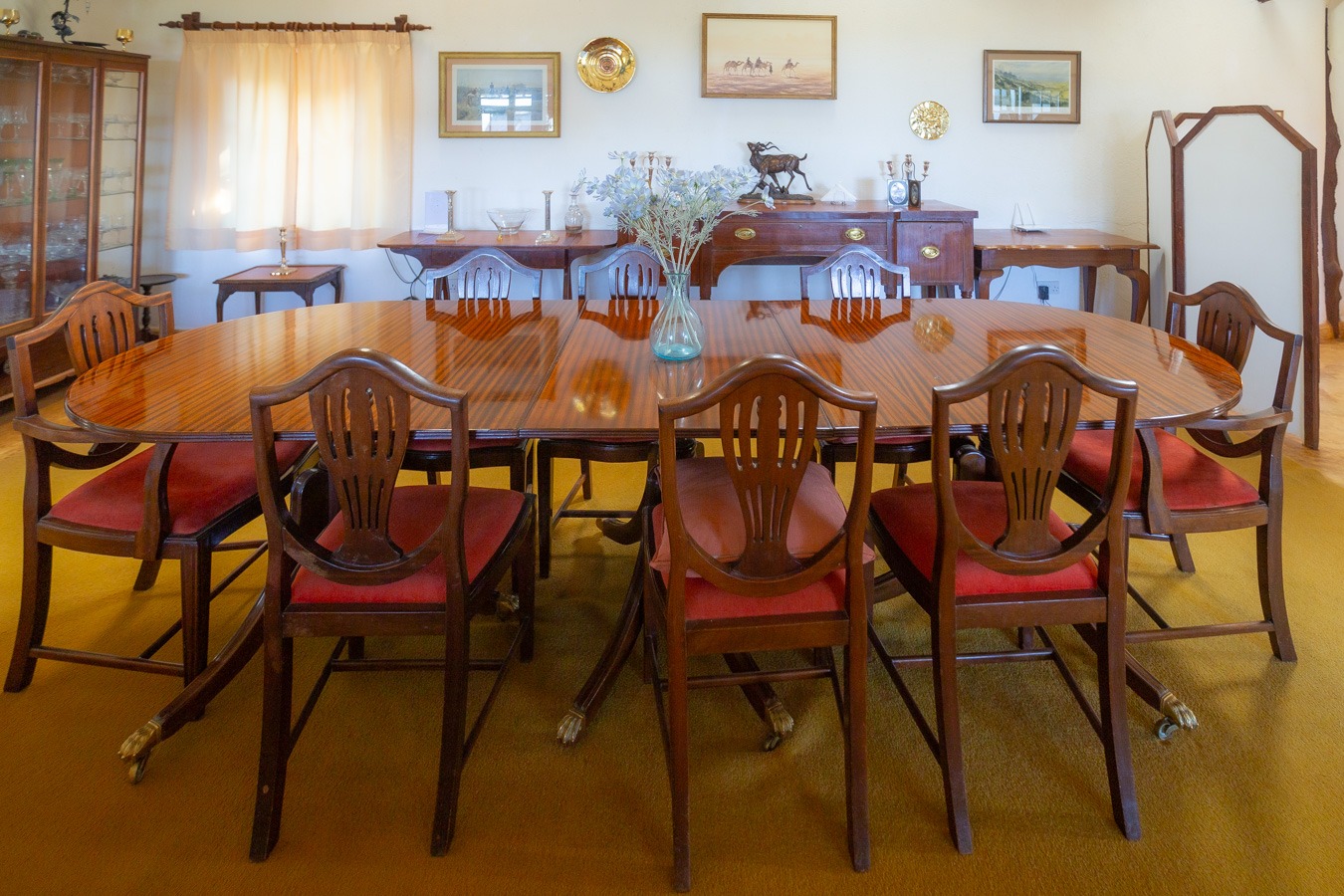
The formal dining room centres around a long wooden table seating up to ten guests beneath another beautifully curved ceiling supported by exposed timber beams.
It is impossible not to think of Out of Africa.
You almost expect Robert Redford to walk through the door.
 |
 |
A Legacy Built by Hand
The house was completed in 2000, but its story stretches much further back.
Before creating TAW’s House, its owner had already built Ngong House and Olololo, both of which later became renowned lodges.
After selling Senator’s House, another of his architectural creations, he settled in Maanzoni.
“Almost every property around this crossroads once belonged to my father,” his daughter told us.
The current home originally served as his workshop.
Eventually, like so many great workshops, it became a home.
Every brick was made on-site.
Every wall carries the colour of local murram.
Every section of the thatched roof was woven by craftsmen he personally trained.
“He was always searching for beauty without unnecessary expense,” his daughter explained. “Everything came from nearby because he loved natural materials.”
The result is architecture that feels as though it has grown naturally from the landscape.
Evenings by the Fire
As darkness settles across the plains, temperatures become pleasantly cool.
Long sleeves replace shorts.
A light jacket becomes comfortable.
Guests gather beside the fireplace with a glass of whisky, sharing stories late into the evening.
This is the moment when everything makes sense.
This is not simply another safari destination.
It is Kenya as it once was.
A place where homes were built with patience, craftsmanship, and soul.
Why TAW’s House Matters
Kenya offers hundreds of safari lodges and thousands of holiday homes.
There is only one TAW’s House.
Because this is not a hotel.
It is not a carefully manufactured tourist attraction.
It is a family home created by one man’s vision—a philosophy that worked with nature instead of against it.
No corners because corners trap bad spirits.
Bricks made on-site because the land already provides everything needed.
Handwoven thatch because true craftsmanship cannot be mass-produced.
This is more than architecture.
It is heritage.
It is craftsmanship.
It is living history.
Practical Information
Location
Maanzoni Wildlife Estate, approximately 45 minutes southeast of Nairobi, depending on traffic.
Accommodation
Available to book through Airbnb.
 |
 |
 |
What You’ll Enjoy
- Fully staffed house with private chef and caretakers.
- Personalised meals prepared according to your preferences.
- Five hectares of private grounds.
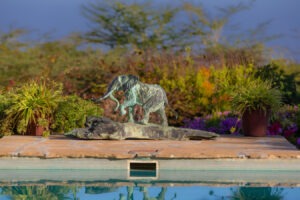
- Swimming pool and spacious veranda.
- Excellent birdwatching.
- Wildlife viewing areas nearby.
- Easy access to a nearby watering hole.
What to Pack
- Lightweight clothing for warm daytime temperatures.
- Long-sleeved shirt or light jacket for cooler evenings.
- Smart-casual clothing if you plan to enjoy formal dinners.
- Binoculars for birdwatching.
- Camera.
Nearby Attractions
- Nairobi National Park – approximately 30 minutes away.
- Amboseli National Park – around 2 to 3 hours by road.
- Tsavo East and Tsavo West National Parks – ideal for extended safari itineraries.
A Home That Welcomes You
TAW’s House is not a museum.
It is a living home filled with stories, craftsmanship, and the spirit of Africa.
Only forty-five minutes from Nairobi, yet a world away from modern life.
Here, architecture tells a story.
Nature sets the rhythm.
And every corner—because there are none—invites you to experience Kenya in its most authentic form.
 |
 |