


Discovering Africa’s Iconic Birds of Prey
The Majestic Eagle of Africa
By Africatourlinks
“Across the vast landscapes of Africa, few sights capture the essence of wilderness like a powerful eagle feeding on its prey”.
Across the vast landscapes of Africa, few sights capture the essence of wilderness like a powerful eagle feeding on its prey. The bird in the image closely resembles a tawny eagle, a widespread and iconic raptor known for its sharp vision, curved beak, and commanding presence. For tourists seeking authentic wildlife encounters, witnessing such a moment in the wild is both thrilling and unforgettable.
Africa’s skies are dominated by birds of prey, and the tawny eagle is among the most commonly seen during safaris. Its behavior often scavenging or hunting small animals—plays a vital role in maintaining ecological balance, making it an essential part of the safari experience.
Where to See Eagles Like This in Africa
Eagles like this can be found across several of Africa’s most famous safari destinations. In Serengeti National Park, visitors often spot tawny eagles perched on acacia trees or feeding in the open plains, especially during the Great Migration when food is abundant. Moving north to Maasai Mara National Reserve, these birds are frequently seen circling above river crossings or resting near grazing herds, waiting for opportunities to feed.
Further south, Kruger National Park offers a diverse environment where tourists can encounter multiple eagle species in a single trip, making it a prime destination for birdwatching enthusiasts. Meanwhile, the open landscapes of Etosha National Park provide excellent visibility, allowing visitors to easily observe eagles scanning the terrain or descending on prey.
A Unique Wildlife Attraction
Eagles are a major highlight for birdwatchers and photographers visiting Africa. Unlike many animals that may remain hidden, birds of prey offer dramatic and visible action, from soaring flights to intense feeding moments like the one captured in the image. These experiences add depth to safari tours, making them more than just a search for large mammals.
Safari guides often use the presence of eagles to interpret the environment for tourists. An eagle feeding or circling can indicate nearby wildlife activity, enriching the storytelling aspect of the safari and helping visitors understand the interconnectedness of the ecosystem.
Photography and Conservation
Capturing an eagle in action is considered a prized moment for wildlife photographers. The growing interest in such experiences has contributed to the rise of eco-tourism, where visitors travel specifically to observe and document nature responsibly.
Organizations such as African Wildlife Foundation play a key role in ensuring that tourism supports conservation efforts. By protecting habitats and working with local communities, they help maintain the delicate balance that allows species like the tawny eagle to thrive.
Close Encounters in the Wild
During a typical safari, sightings of eagles often occur in the early morning or late afternoon when wildlife activity is at its peak. Tourists may witness an eagle tearing into prey, perched calmly while scanning the surroundings, or gliding effortlessly across the sky. These encounters are usually guided with care to ensure minimal disturbance to the animal while providing a clear and memorable view for visitors.
Best Time to Visit
The dry season, generally from June to October in East Africa, is the best time to experience such wildlife moments. During this period, animals gather around water sources, increasing the chances of seeing predators, scavengers, and birds of prey interacting within the same environment.
Why This Matters for African Tourism
Wildlife such as the tawny eagle represents more than just a visual attraction; it reflects the richness and diversity of Africa’s natural heritage. Tourism centered around these experiences contributes significantly to local economies, creates employment opportunities, and supports conservation initiatives.
Countries like Tanzania and Kenya have become global leaders in eco-tourism by preserving their wildlife and promoting responsible travel. Visitors leave not only with photographs but with a deeper understanding of nature and the importance of protecting it.
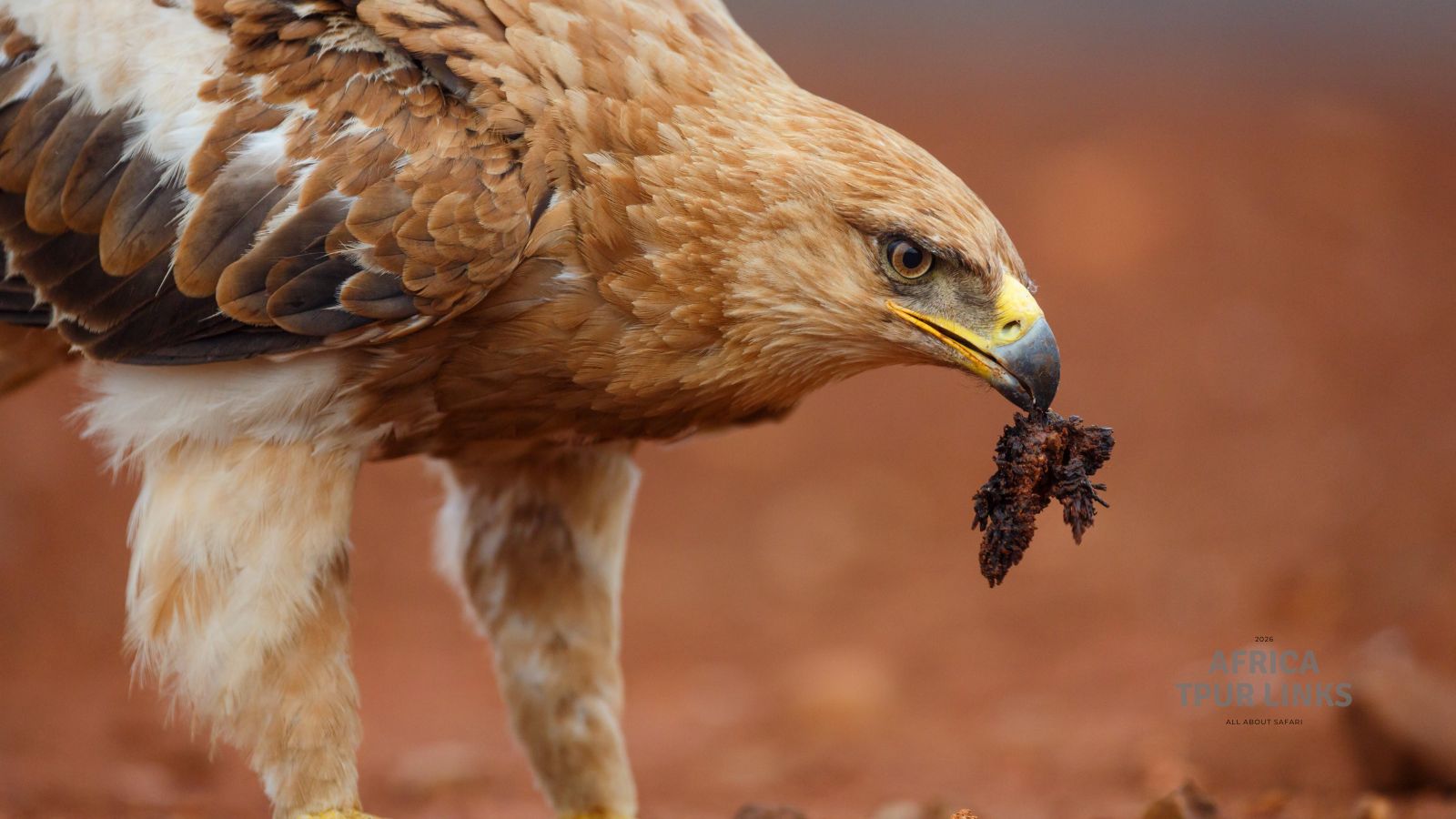
The image of an eagle feeding is a powerful representation of Africa’s untamed beauty. For tourists, it is not just a moment of observation but a story of survival and a connection to the natural world. Experiences like this define African safaris and continue to attract travelers from around the globe seeking authenticity, adventure, and a deeper bond with nature.