




Bee-eater – Africa’s colorful bird acrobats and some of the continent’s most beautiful flyers
By Africa Tour Links
Many travelers remember Africa through lions, elephants, giraffes, and dramatic landscapes. Yet some of the most unforgettable wildlife moments come in smaller and brighter forms. Bee-eaters are among Africa’s most striking birds, famous for vivid colors, elegant flight, and remarkable hunting skill.
For travelers who enjoy photography, birdwatching, or simply noticing beauty in motion, these birds can become a highlight of any safari or nature journey. They are fast, graceful, social, and often seen in some of Africa’s most scenic environments.
Why bee-eaters matter in Africa
Bee-eaters belong to a family of birds found across Africa, Europe, Asia, and Australia, but the African continent holds many especially colorful and iconic species.
They help control flying insect populations by feeding on bees, wasps, dragonflies, and other airborne prey. Their precision hunting, often launched from a branch or exposed perch, makes them fascinating to observe.
Because many species prefer open landscapes, riverbanks, and savannah edges, travelers frequently encounter them during safaris and overland journeys.
Nature’s flying jewels
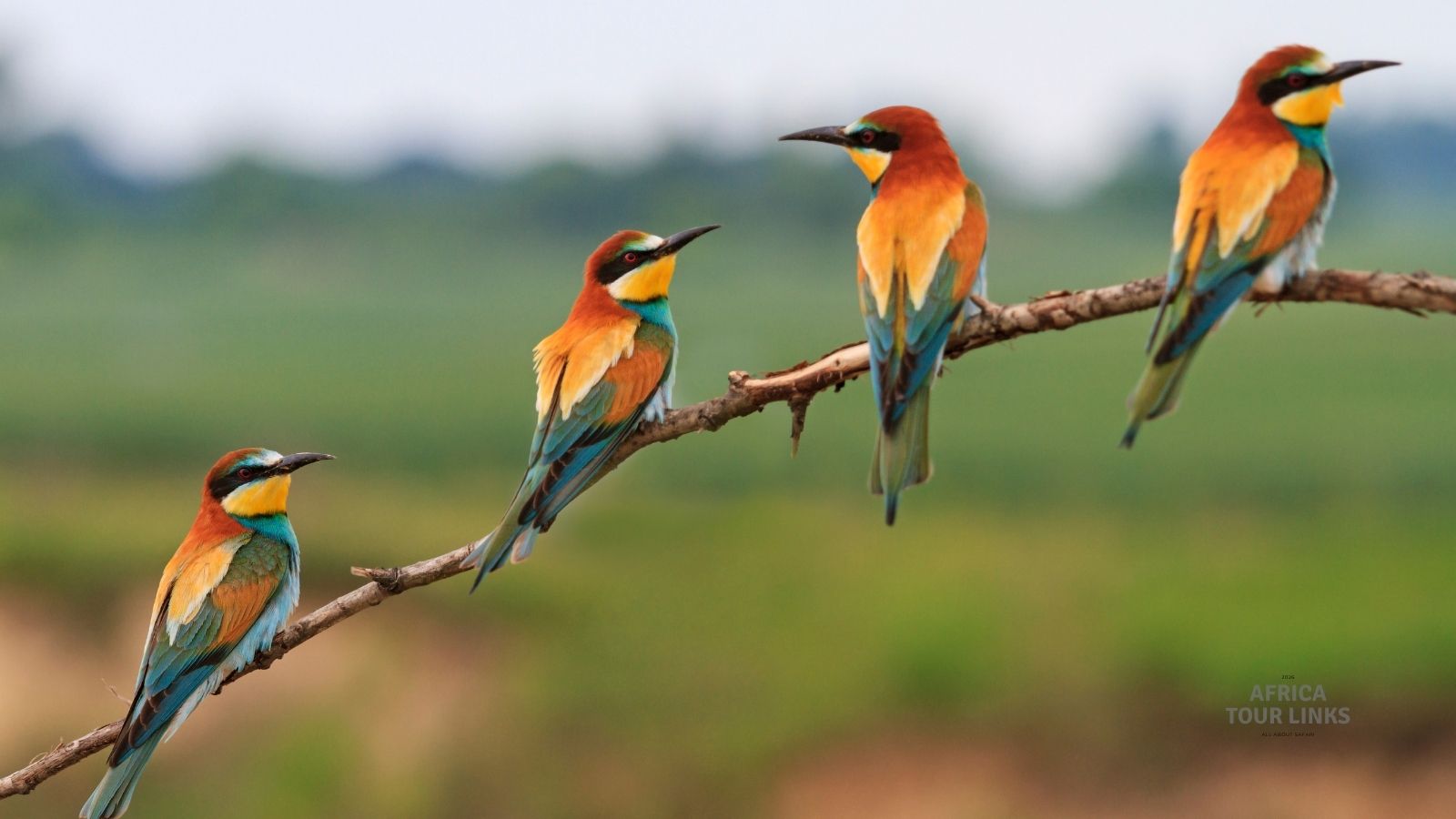
These birds are known for brilliant combinations of green, blue, yellow, chestnut, black, and turquoise. Long central tail feathers in some species add elegance and movement during flight.
Their bodies are streamlined, their wings narrow, and their flight highly agile. They often catch insects in mid-air before returning to a perch.
In morning or evening light, their colors can appear almost unreal, making them favorites among photographers.
Common bee-eater species in Africa
Africa is home to several outstanding species.
The Lilac-breasted Roller is not a bee-eater, but many travelers confuse it with them because of its colors. True bee-eaters include the stunning Little Bee-eater, the elegant White-fronted Bee-eater, and the famous Carmine Bee-eater.
The Carmine species is especially admired for bright crimson plumage and large colonies along riverbanks.
Where travelers may see them
Bee-eaters in Africa are commonly seen in:
- safari parks
- river valleys
- lake shores
- woodland edges
- open savannah
- lodge gardens
- wetlands
- farmland with trees
They often sit visibly on branches, wires, reeds, or shrubs before launching into short aerial hunts.
Bee-eaters on safari
Many safari guests focus on mammals, yet these birds can add excitement between major wildlife sightings.
Watching one leave a branch, catch an insect in the air, then return to the same perch is a classic African nature moment. Some species gather in groups, creating constant movement and color.
Along rivers in countries such as Tanzania, Botswana, Zambia, Namibia, and Kenya, large colonies can become one of the great hidden safari experiences.
Read our Tanzania Safari Guide
Explore Best Birdwatching in Africa
See East Africa Wildlife Destinations
Clever hunters with a special technique
Despite their name, bee-eaters do not simply swallow bees immediately. When catching stinging insects, they often beat the prey against a branch to remove or reduce the sting before eating it.
This behavior shows instinctive precision and is one reason they are so interesting to watch closely.
Their eyesight is excellent, helping them track small fast-moving insects in open air.
Best time to observe them
Early morning and late afternoon are often ideal. Birds become active in softer light, and photographers benefit from warmer tones.
Dry seasons may improve visibility in open landscapes, while riverbanks and wetlands often remain productive year-round depending on region.
Migration patterns also influence sightings, as some species move seasonally.
Why they deserve more attention
Africa is famous for giant mammals, but beauty in nature is not measured by size. Bee-eaters represent color, speed, elegance, and ecological balance.
For many travelers, a close view of one perched in golden light can become just as memorable as seeing larger animals.
They remind visitors that safari magic often lives in the details.
Final thoughts
Bee-eaters may not headline every travel brochure, yet they are among the most spectacular birds in Africa. Their colors, flight, and hunting skill make them unforgettable.
For travelers who look beyond the obvious, these birds reveal one of the continent’s brightest natural treasures.

Fascinating facts about African bee-eaters
Many bee-eater species nest in tunnels dug into sandy riverbanks or earth walls. Both male and female birds may help excavate these burrows, which can stretch surprisingly deep for protection from predators and heat. In some colonies, dozens or even hundreds of birds breed close together, creating lively social communities filled with calls and constant movement.
These birds are also highly dependent on healthy insect populations, making them sensitive indicators of environmental change. Areas with pesticide pressure or habitat loss may support fewer birds over time. Their presence often signals functioning natural systems where wetlands, grasslands, woodland edges, and river habitats still support abundant insect life.
FAQ
What is a bee-eater?
A bee-eater is a colorful bird that catches insects in flight, including bees and wasps.
Are bee-eaters found in Africa?
Yes. Africa is home to many beautiful bee-eater species.
Where can tourists see bee-eaters?
They are often seen on safari, near rivers, in savannah areas, and around wetlands.
Are bee-eaters good for nature?
Yes. They help control insect populations and are part of healthy ecosystems.
What is the most famous African bee-eater?
The Carmine Bee-eater is one of the most admired species.
Meta Title
Bee-eater in Africa – Colorful Birds of Safari Landscapes